
New Construction Home Inspections in Columbus: What Your Builder Won’t Tell You (And Why You Need an Independent Inspector)

So you’re buying a brand-new home in Columbus. Congratulations! The walls are crisp, the floors are spotless, and everything smells like fresh paint and possibility. Your builder assures you that the house has been inspected at every phase, so you’re good to go, right?
Not so fast.
Here’s what most new construction buyers don’t realize: municipal building inspections and independent home inspections serve completely different purposes. And understanding that difference could save you tens of thousands of dollars: and a whole lot of heartache.
The Truth About Municipal Building Inspections
Let’s clear something up right away. At Habitation Investigation, we don’t perform code inspections. That’s the city’s job, and they handle it during construction. Municipal inspectors verify that the building meets local codes: the minimum legal requirements for safety and construction.
But here’s the thing: building inspectors are stretched incredibly thin. During a typical residential build in Columbus, inspectors might spend a total of less than 4 hours on-site across all their visits. Think about that for a second. There are over 3,000 individual components in your new home that require attention, and the inspector might be on-site for the framing inspection for about an hour.
We’re not criticizing municipal inspectors: they’re doing exactly what they’re supposed to do within the time and resources they have. But their focus is on legal compliance, not on the quality of workmanship or whether every component was installed according to manufacturer specifications.
What Falls Through the Cracks
This is where things get interesting (and a little concerning). Building codes often defer to manufacturer specifications for critical systems: your roof, your HVAC, your siding, your windows. The city verifies that these components meet basic code requirements, but there’s generally nobody checking whether your roofer followed the shingle manufacturer’s exact installation guidelines.
That matters because when your roof fails prematurely and you try to claim the warranty, the manufacturer will send someone to investigate. If they find the installation didn’t follow their specifications: even if it met local building codes: your warranty claim gets denied. Suddenly, that “brand new” roof is coming out of your pocket.
The same goes for your HVAC system, your windows, your siding, and dozens of other components throughout your home.
The Three-Phase Inspection Strategy That Actually Works
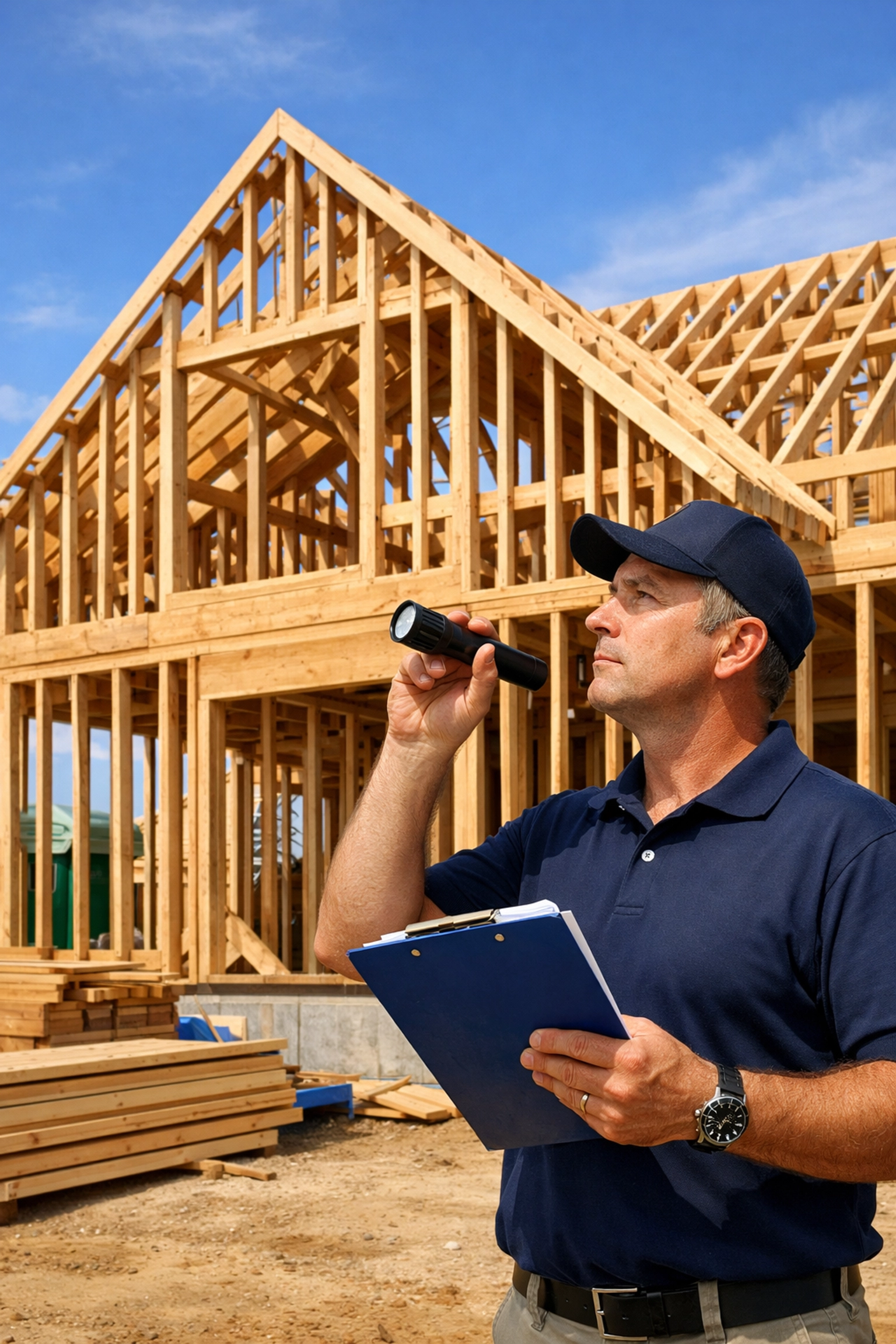
At Habitation Investigation, we recommend a three-phase independent inspection approach for new construction. This isn’t about hunting for “code violations” (we don’t do code enforcement): it’s about verifying standard building practices, functionality, and manufacturer installation guidelines before problems get buried behind drywall or show up after you move in.
Phase 1: Pre-Drywall Inspection (The Most Critical Phase)
This is the inspection most new construction buyers skip: and it’s the one that matters most.
Once drywall goes up, you’ll never see your home’s plumbing, electrical, and structural systems again. That means you have exactly one opportunity to verify that everything was installed correctly and functions properly.
During the pre-drywall phase, we examine:
- Plumbing installations: Proper pipe support, correct connections, and whether drain lines have the appropriate slope for proper drainage
- Electrical installations: Wire routing, junction box installations, proper grounding, and whether everything follows standard electrical practices
- Structural elements: Notching and drilling in framing members, proper installation of load-bearing components, and structural connections
- Insulation and air sealing: Proper installation before it gets covered up
- HVAC rough-in: Ductwork installation, proper sizing, and return air considerations

This phase isn’t about nitpicking minor cosmetic issues. It’s about making sure the bones of your house: the systems you’ll rely on for decades: were built right the first time.
Phase 2: Final Walkthrough Inspection (Right Before You Close)
Right before you close, we conduct a comprehensive walkthrough inspection of the finished home. This is what most people think of when they hear “home inspection,” and while it’s important, it can’t catch the issues that were buried during construction.
During the final walkthrough, we evaluate functionality, manufacturer installation compliance, and overall workmanship of visible components. We’re checking things like window operation, proper flashing installation, roof installation quality, finished plumbing fixtures, HVAC system operation, and grading and drainage around the completed home.
Phase 3: 11-Month Inspection (Before the One-Year Builder Warranty Expires)
This one’s a sleeper. Right before your one-year builder warranty runs out, we come back and do an 11-month inspection to help you catch issues that may have taken a little time to show up.
We’ll look for things like:
- Settlement-related items: doors that started sticking, drywall cracks, trim separation
- Moisture and drainage concerns: grading, downspout discharge, early signs of water staining
- Mechanical performance: HVAC operation, bathroom fans, and other systems that may “work” but aren’t working well
- Manufacturer guideline red flags: installs that might shorten equipment life or create warranty headaches
It’s a simple way to hand your builder a clear, documented punch list while you still have the most leverage.
The Issues We Actually Find in “Brand New” Homes
You might be thinking, “How bad could it be? The house is brand new!”
Here’s what we routinely find during new construction inspections in Columbus:
Improperly installed flashing around roof penetrations, which leads to water intrusion down the road. The roof might meet basic requirements, but if the flashing wasn’t installed according to the manufacturer’s specifications, you’re looking at potential leaks.
Inadequate insulation or improper installation that reduces energy efficiency and creates comfort issues. Sometimes insulation is missing entirely in certain cavities, compressed to the point of uselessness, or improperly air-sealed.
Plumbing issues like improperly supported pipes, incorrect drain slopes that cause slow drainage or backups, and missing trap primers on floor drains.
Electrical installations that technically work but don’t follow best practices for long-term reliability or safety.
Structural compromises like incorrectly placed holes or notches in joists that could affect long-term structural integrity, or missing joist hangers and structural connections.
HVAC installations that don’t follow manufacturer guidelines, reducing efficiency and potentially voiding warranties.

None of these issues violate building codes necessarily, but they all represent substandard work that will cause you problems: and cost you money: after you close.
Why This Matters for Your Wallet (and Your Sanity)
Here’s the part most builders don’t explain clearly: Once you close on the house, any defects become your problem.
Sure, most builders offer a one-year warranty on workmanship. But what happens when you discover major plumbing issues during year two? Or when your roof develops leaks three years in because the flashing was installed incorrectly?
You’re on the hook for repairs that should have been done correctly during construction.
Even worse, when you go to sell your Columbus home in a few years, the buyer’s inspector will find these issues. You’ll either pay to fix them then, negotiate a lower sale price, or watch your buyer walk away entirely.
Having documentation of professional independent inspections completed during construction shifts the responsibility back where it belongs. If we identify an installation issue during pre-drywall, the builder fixes it before drywall goes up: a $200 repair instead of a $5,000 nightmare later.
What Makes Independent Inspections Different
At Habitation Investigation, our job is straightforward: evaluate how your home was built against standard building practices, verify functionality, and confirm that components were installed according to manufacturer specifications.
We’re not there to enforce codes or write up violations. We’re there to be your advocate, giving you a clear picture of what you’re actually buying.
We explain how things should work, how they were installed, and what the implications are if something wasn’t done according to standard practices or manufacturer guidelines. Then you have the information you need to make decisions and request appropriate corrections from your builder.

The Bottom Line for Columbus Homebuyers
A new construction home inspection in Columbus isn’t about distrusting your builder. Most builders want to deliver a quality product. But construction is complex, timelines are tight, and subcontractors vary in skill and attention to detail.
An independent inspection is your insurance policy: a small investment that protects your much larger investment in your new home.
Think about it this way: you’re spending $300,000, $400,000, maybe $500,000 or more on this house. Spending $1,200-$1,800 on three-phase inspections to verify you’re getting what you paid for isn’t excessive: it’s just smart.
Ready to Protect Your Investment?
If you’re building or buying new construction in Columbus, contact Habitation Investigation before construction gets too far along. Ideally, we’d love to inspect after the foundation and definitely before drywall installation.
We serve the entire Columbus area, including German Village, Clintonville, Grandview Heights, and surrounding communities. Our goal isn’t to kill your deal or create problems with your builder: it’s to make sure you move into a home that was built right the first time.
Because “new” and “problem-free” aren’t always the same thing. But with the right inspections at the right times, you’ll have the peace of mind that comes from actually knowing what you’re buying.